

La pointe du Minou
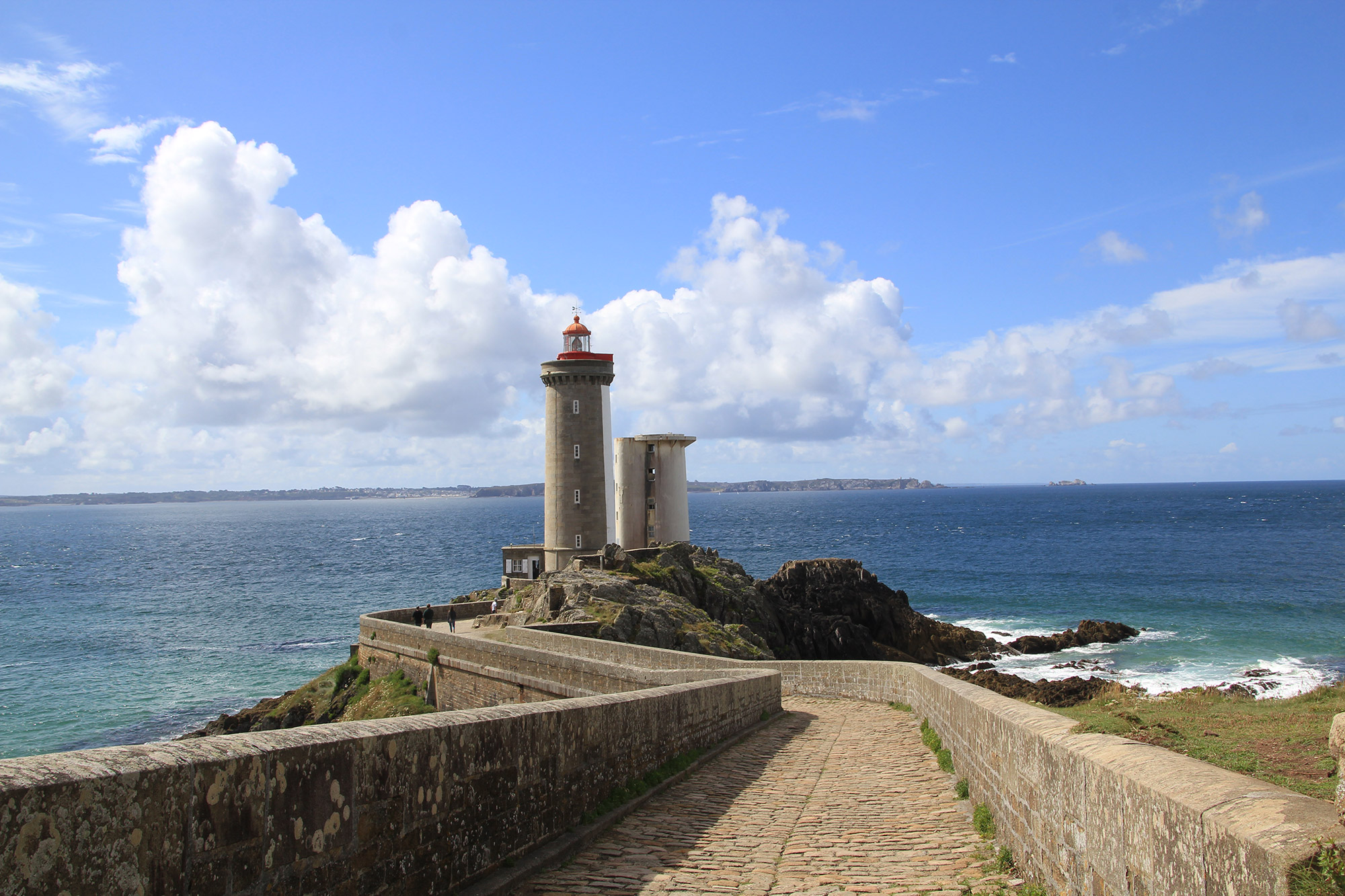
It’s impossible to make a stopover in Plouzané without visiting the Petit Minou lighthouse, proudly perched on its rocky headland overlooking the Crozon peninsula, with breathtaking panoramic views.
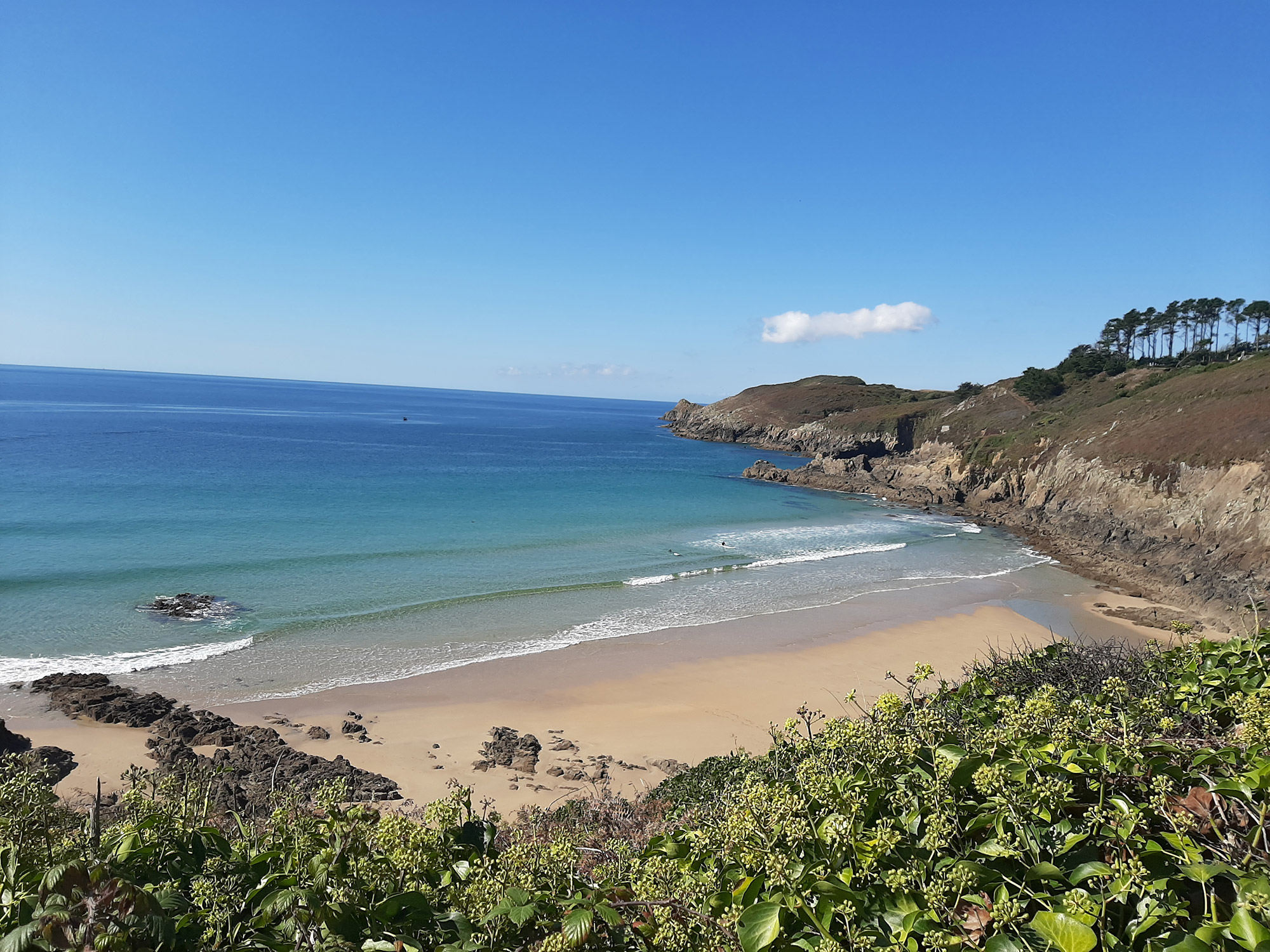
As well as the lighthouse, you can also visit the fort on which it stands, and the nearby beach, which is a firm favourite with surfers!
The lighthouse, an exceptional heritage site
The Minou lighthouse was built on the headland in 1848. A 24-metre-high granite stone bridge leads to the lighthouse’s cylindrical tower. The tower is 26 metres high and has been automated since 1989, projecting a red and white light every 6 seconds. Its range is 18 nautical miles in white and 14 nautical miles in red (i.e. 30 km and 23 km).
 The origin of the name
Despite « Minou » being a popular cat nickname (like Kitty) there is no feline connection… « Min » means « mouth » or « point » in Breton and becomes « minou » in the plural. The site is in fact made up of two points, the Grand Minou and the Petit Minou.
A true paradise
The Petit Minou is known as a « paradise » lighthouse, because it is located on the coast. There are also « purgatory » lighthouses on islands, and « hell » lighthouses on the open sea. However, unlike the other « paradises », Le Petit Minou is unique in that it has several rooms where the keepers can stay.
A site with many angles
Fascinated by history, nature, water sports or walking? You’re bound to find something to suit you at Le Minou. Just below the Fort, the GR 34 will take you to the Petit Minou beach, a well-known surfing spot in the region.
Military origins
Fort du Minou is one of the many fortifications built to control the Brest Narrows. Built between 1694 and 1697, it is surrounded on the landward side by a moat 9.5m wide and 3m deep. Access was via a drawbridge. At the end of this first phase, the Minou fort already resembled what we see today: a heavily armed entrenchment protected by a high wall. There were also several buildings housing the garrison, ammunition and supplies, etc.
In 1841, in response to new threats, the ramparts were consolidated, thickened and raised to their current height. In 1844, it was decided to reorganise the Minou fort. The fixed bridge at the entrance was replaced by a drawbridge.
In 1870, the Minou’s role as a military fort was further re-asserted. The site was extended to include underground casemates for firing low over the water and high batteries.
As Franco-British rivalries died down in the early twentieth century, the heavy equipment was gradually withdrawn and redirected to eastern France, where other conflicts were looming on the horizon… The fort then surprisingly became a leisure site: Between the two world wars, Edmond and Dalila Torchiot set up a hotel and a rotisserie there, whose reputation spread far beyond the Brest region.
During the Second World War, the site was a strategic point for the defence of the Narrows, and a blockhouse was built there. Ammunition could be supplied from the beach, at the foot of the fort, via the old passages built into the ramparts in Vauban’s time. In 1940, the Germans arrived and occupied the fort. Four years later, at the Liberation, not much remained of the former restaurant or the buildings that previously occupied the enclosure.
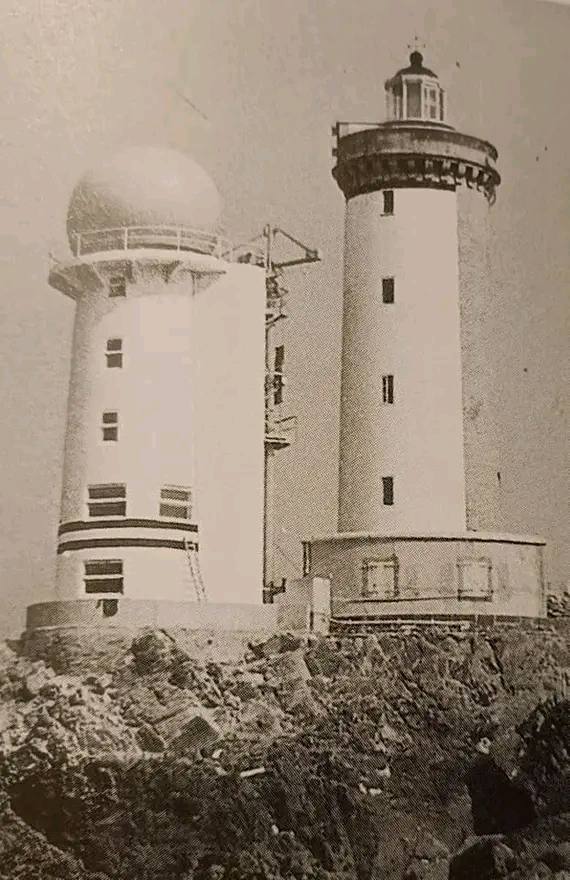
After the war, the site was abandoned and housed only the lighthouse and the caretaker’s house. At the height of the Cold War, there were fears of attacks against the fleet and submarines based in the harbour. A tower was built on it to protect it from mines dropped from aircraft. At the top of the tower was a radar that kept watch over the Narrows until the early 1980s, when it was dismantled.